
Author: Terence Hannum
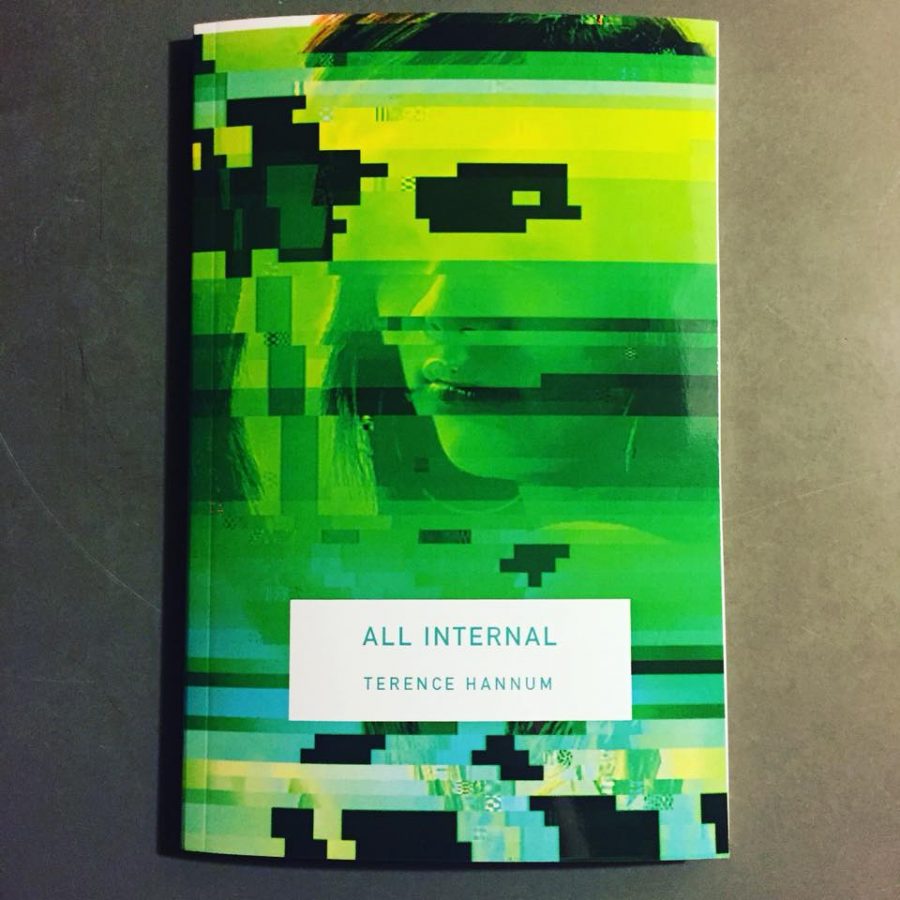
Book: All Internal
Release date: 30 April 2018
Publishing House: Dynatox Ministries
I briefly met Terence Hannum at the APEX Fest 2015 here in Baltimore, Maryland. He’s involved in a number of different things around the music and art scene here, and so it was only a matter of time before we crossed paths. Most interesting to me was his musical work as the singer/synth/electronics guy in the band Locrian. He recently released his debut as part of the Lynchian sort of darkish synth-pop group The Holy Circle on Annihilvs Power Electronix. He’s also recently begun to release albums and perform solo as the power-electronics project Axebreaker. While all these projects are quite interesting to me, they all dance around the edges of dark ambient, and I’ve yet to properly cover one, though I have listened to and enjoyed all three of these named projects repeatedly.
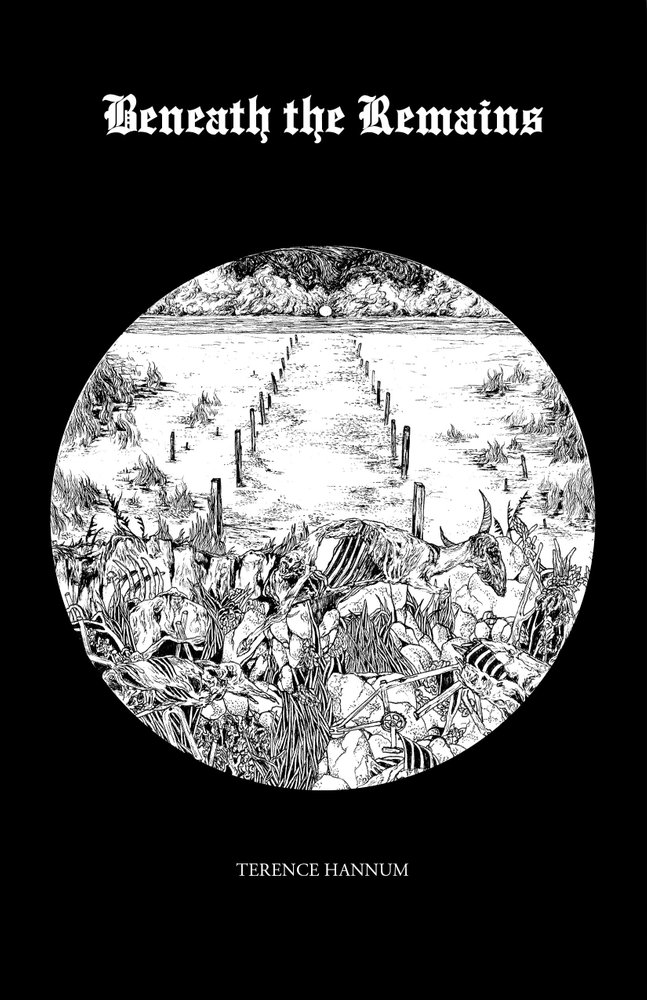
Hannum’s first novella, Beneath the Remains, released in 2016 and focused on a young boy in Florida, as he dealt with the aftermath of his older brother’s disappearance. It often raised feelings of nostalgia, yet there was a darkness that always lurked beneath the surface, creeping up through various events as the story progressed.
Two years later, Hannum returns with his second novella, All Internal. A story which takes a deep look, literally and through allegory at some of the darker elements of the age of social media, and the underbelly of video-clip internet porn and webcam modeling. But, Hannum doesn’t simply give us a standard tale of someone’s misfortunes. All Internal instead takes the horror/ sci-fi/ weird-fiction route, with a large helping of graphic (sexual and otherwise) detail along the way. In this way, Hannum is able to blend together his passions for fine writing and cultural politics, highlighting his more academic side, with his loves for darker topics, previously explored through his musical projects and artwork.
All Internal takes some pretty interesting twists and turns along the way. Not knowing what to expect next, or understanding the context in which something is happening adds a lot to the overall effect here. So, I won’t be going into the actual storyline in any detail in this review. Instead, I’d prefer to focus on the reasons why, and type of person that may enjoy this sort of story.
Hannum’s writing style on All Internal makes use of quick snippets of information. Scenes/chapters which may only last for 1 – 3 pages on average. I find this to be an incredibly potent writing style in our current culture, where the average person consumes the majority of their news through headlines and talking points, not in depth articles and discussions. A time when presidents make their case for policy in 280 characters or less. But, any possible disdain for this situation aside, these short paragraphs really do make for a meaningful reading experience. When you are able to consume a section of text, and then stop to think about its possible deeper meanings.
As for deeper meanings, there is a lot to unpack here. One could innocently read through this 100 +/- pages of text without taking any allegorical meanings or greater contexts into consideration. Which would be fine. But it is quite interesting to dig into the topics and scenarios presented, and wonder exactly how much more Hannum could be conveying. As I read through the story, I took note of various ideas arising, things that seemed to parallel Hannum’s narrative.

One huge and recurring theme, for me, was the question of the soul. Hannum clearly points out the question of mind or body. But, this question is taken to its furthest extents. Do we have free will or are we slaves to our ritualized patterns. Is the mind really telling the body what to do, or is the mind just noticing that the body is doing, without any ability to influence. Another important topic that seemed, to me, unavoidable when reading All Internal, is the question of women’s reproductive rights. Or in an even broader sense, humanity’s ability to fully comprehend and then influence decisions on reproduction in relation to the planet’s overall population and ability to sustain itself.
Hannum’s writing style is certainly modern. The topics I believe he is alluding to are front and center in modern times. But, as I read All Internal, I also felt that Hannum found a lot of influence and inspiration from the weird-fiction authors of the 1920s and 1930s. Maybe this is just because of my constant saturation in this topic, but I seemed to notice some striking allusions, or at least nods, to the writings of H.P. Lovecraft and maybe even more of Clark Ashton Smith. Without going into any detail that would speak directly to plot twists, there were several moments, especially in the second half of the story, as Hannum begins to unveil more specifics of the story’s framework. Whether I’m right or wrong to make a connection there, I would certainly say that fans of those authors, and more modern authors like Neil Gaiman and Thomas Ligotti will certainly find things to love. In many respects, Hannum takes these sorts of themes and steps the intensity up, to something more on par with our current societal norms/boundaries.
All Internal is a quick and enjoyable read. One that you could knock out rather quickly, if the story so engrosses you. Or, one which you can casually read in these short 1-3 page sections, over a greater period of time. While I already loved Beneath the Remains, I found All Internal more stylistically in line with some of my favorites, and so I would want to recommend this as well to our readers, many being generally fans of the same sorts of stories and films. I found my playlist of dark ambient awaiting review was the perfect accompaniment to this story, at certain times playing things on one end of the spectrum, but as the story took twists, I was adjusting the music’s themes accordingly. An all around enjoyable experience. I’m definitely hoping Hannum does more future work in this vein!
Review by: Michael Barnett
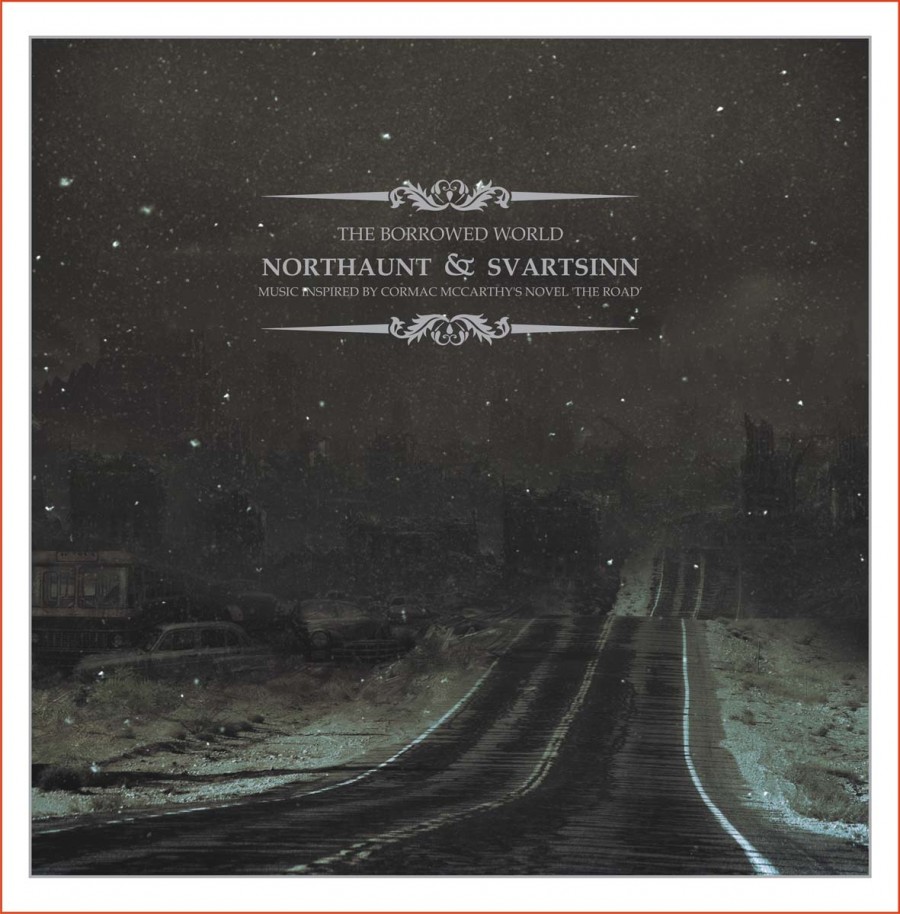
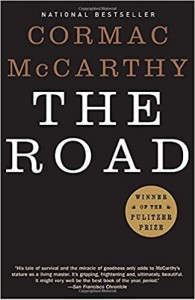 The Road, a post-apocalyptic novel by Cormac McCarthy, has lent inspiration to a number of dark ambient players. Yet, no where more strongly or directly than on the instant classic The Borrowed World, a split by Northaunt and Svartsinn.
 To understand what The Borrowed World is all about we must first understand the common thread between the two artists. The Road, a post-apocalyptic novel by the renowned author Cormac McCarthy. The Road follows a man and his young son through a world that is lost. Devastation presents itself to them at every turn. The struggle to wake the next morning and keep fighting for life is existentially hard for them to grasp.
 Yet, as we move into the second half of “If Only My Heart Were Stone”, the soundscapes take an emotional turn. We move from dull gray vistas into the mind of the protagonist. The father struggles with a key dilemma throughout the novel: Is it better to commit a murder / suicide and end the suffering of himself and his child, or should they continue to fight for life, even if there seems to be no chance of respite. Northaunt makes it possible for us to feel those emotions. “If Only My Heart Were Stone” moves from those barren soundscapes into his most introspective and emotional work to date.
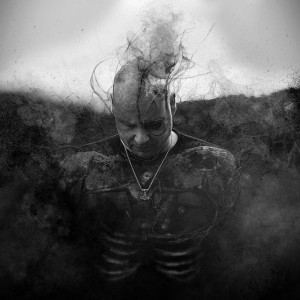 Svartsinn opts to incorporate a few samples from the movie adaptation of the novel into his track. We hear the father describe those last moments with his wife. Then, moments later, we hear the son crying out, “Papa! Papa!” in a sickly heart-wrenching whimper. As the last major events of the album, these clips tear at the heart, leaving the listener in a sullen state of mind.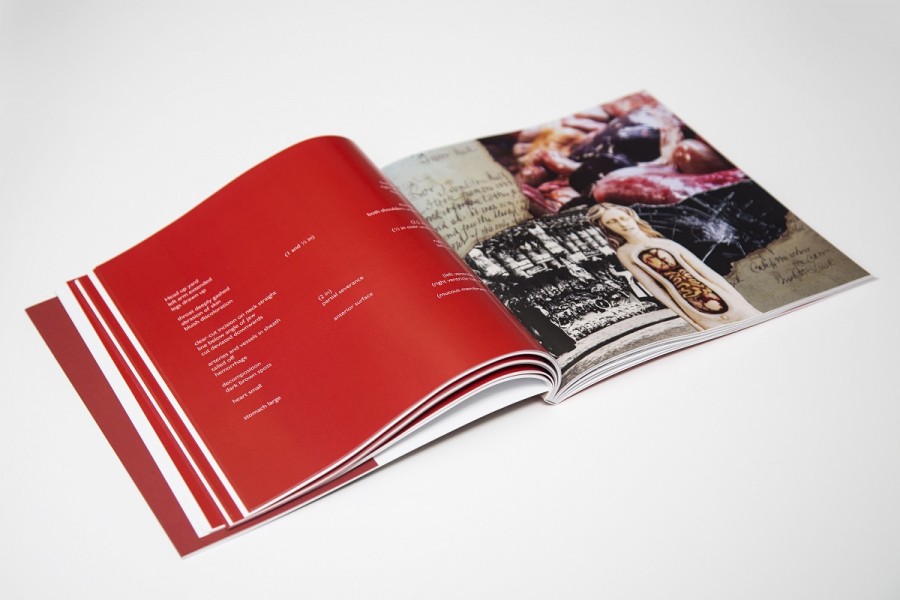
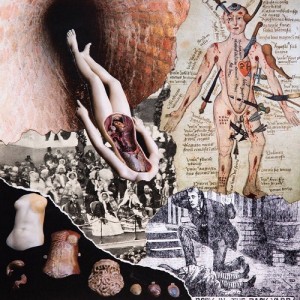 considered a normal format. The Void Ratio by Shane Levene and Karolina Urbaniak brought together photography and poetry to form a powerful picture of the life of mental destabilization matched to crippling drug addiction. Altered Balance by Jeremy Reed and Karolina Urbaniak delivered an unorthodox variation of a tribute to Coil, through the memoirs of Reed and the emotive monochrome photography of Urbaniak. The Rorschach Text by Martin Bladh showcased his brilliant use of collage in creating a narrative. Many of these elements have come together in DARKLEAKS – The Ripper Genome to form what I consider to be the best work yet by
  While Martin Bladh’s cuts are even more literal. Martin uses the scalpel to cut the pieces for his collages which at times bring the faces of two or three different men together, as if drawing them all into a set narrative. For me, the most frightening example of this was toward the end of the book where he combines Aleister Crowley, Anthony Hardy and the physician who was believed to be Jack the Ripper himself, adorning the right page. With the clippings from three articles detailing the works of these three men on its opposite. The combination is a fitting example of the way this entire book works. We are given snippets, flashbacks and narrated accounts of the thoughts and desires of so many different people throughout recent history, since the time of Jack the Ripper. This amalgamation of swirling narratives comes together to form a picture of this ‘ripper genome’, this hardwiring of the brain in some people which naturally inclines it toward these savage deeds.
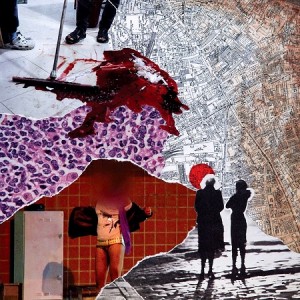 narratives and allegories to bring the reader stumbling toward an understanding of the whole theme. To add even more complexity, and often disorientation to the mix, Reed hops from prose to poetry and back again. Some tales from the view of our modern times, others taking place in the late 1800s – early 1900s.
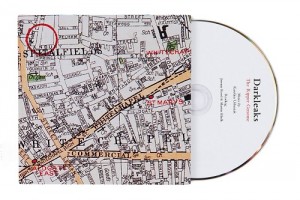 IRM and Skin Area, takes on one of his more chilling vocal styles reading several of his notes written by the killers. While Reed recites some of the more poetic clips from his works. With the disc being full of spoken-word elements it should be looked at as its own individual addition to the set, not as a background listen when reading. Each track helps color the stories in even more detail, bringing each segment to life in a totally different format from the written words and collages.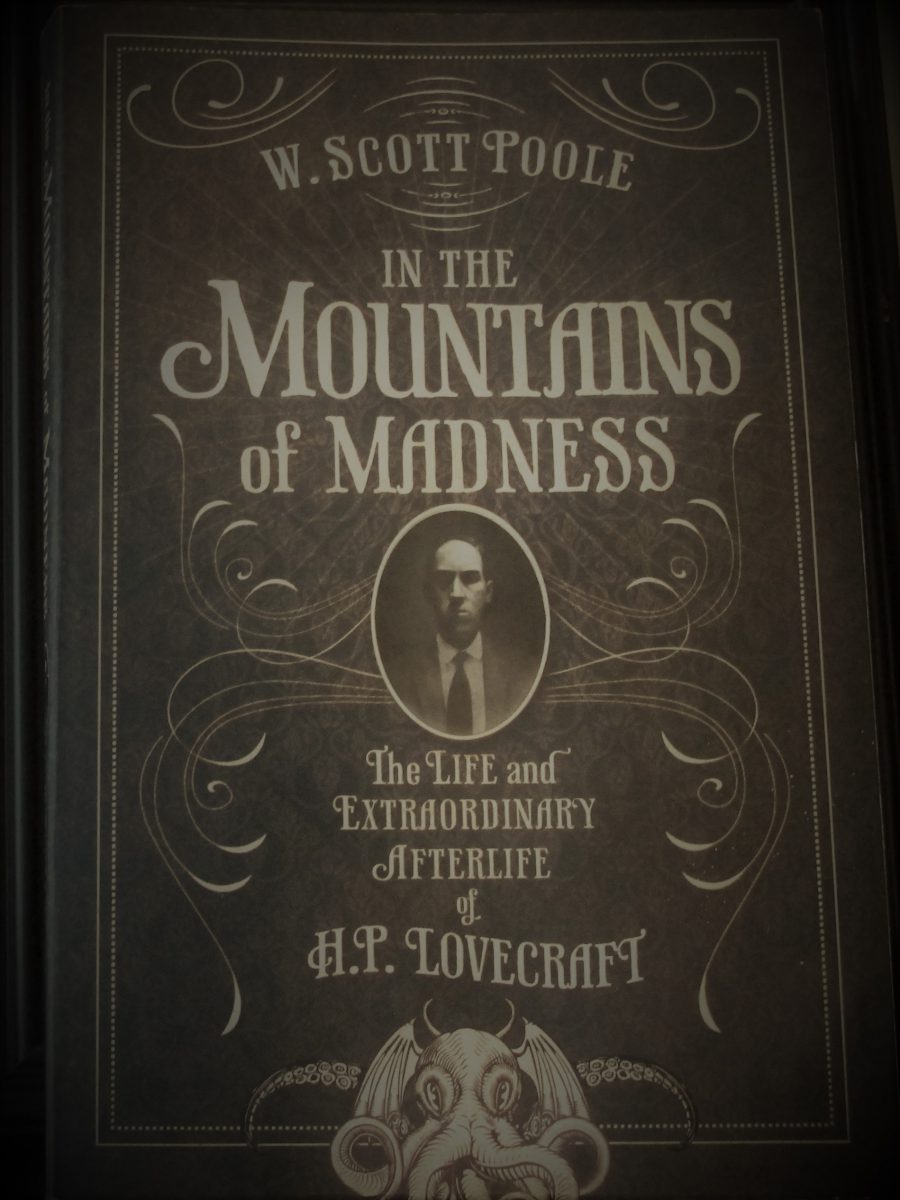
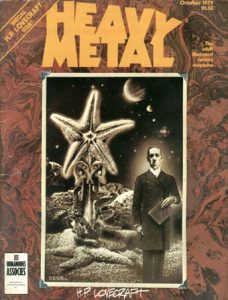
 H.P. Lovecraft can be found everywhere these days. His stories are constantly being reprinted. His ideas are used in films, games and musical compositions. I found my way to his work through one such project, the Lovecraft Gods series on Cryo Chamber. Seeking to understand the meanings of his system of Gods, I began to delve into Lovecraft. But, with so many stories, many of which only barely touch on any of the structural order of the Gods, the task proved to be daunting. This is when I came upon In the Mountains of Madness.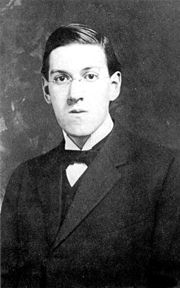
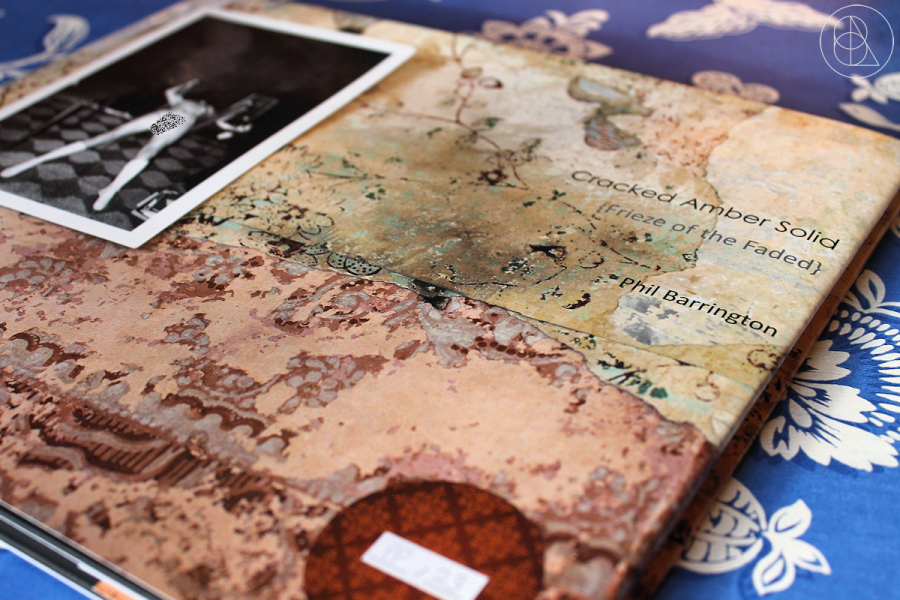
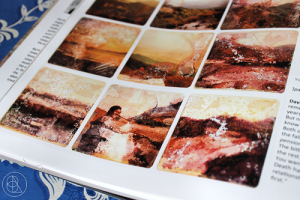 Cracked Amber Solid {Frieze of the Faded} is the third book by Phil Barrington. In this art book, we see the faded and corrupted memories and ghosts of lives once lost. Over the better part of three decades, these photographs were collected by the author. After the revelation of this project, he left these photos outside for three whole years. Over this time the photographs were often distorted beyond recognition. Those which are still perfectly clear at least have a fade and filth of antiquity.
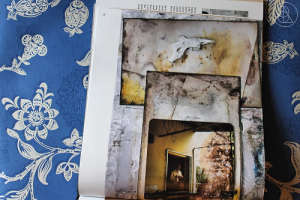 Barrington thanks, among others, The Caretaker in the beginning of the book. I found this immediately interesting, as one who lives for music. Not sure if this was The Caretaker musical project of Leyland Kirby, I allowed it to remain an open question as I proceeded. Moving through the book, it became abundantly clear that this was the musician in question. The use of repetitions and thoughts which fragment and distort immediately reminds of a written companion to the aural style of The Caretaker.
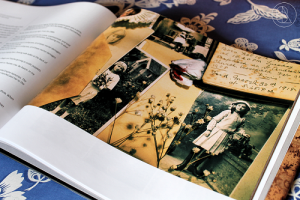 In a second comparison to The Caretaker, Barrington has used collected fragments of history, which come together as a whole. In his collages of photographs and text, he paints a vivid and altogether original picture. This is quite similar to the process Leyland Kirby uses when creating his albums, by digging through the old forgotten belongings of the deceased, finding antique records to use for his modern musical project.
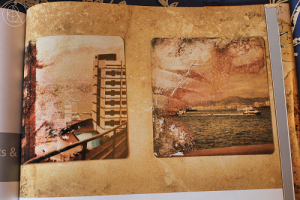 As a whole, Cracked Amber Solid is a depressing piece of work. One can’t help but reminiscing back to times in their own lives, or the lives of their loved ones, when parallel circumstances presented themselves. Barrington uses this mechanic masterfully. He is able to take these disjointed and seemingly random sets of photographs and text, and bring them all together to form a powerfully moving work of art. The images themselves are quite thought provoking, if often filled with extremely vivid sexual themes. Reading this book and absorbing its imagery was certainly time well spent. As a person who is often prone to boredom when reading the works of many authors, this was never the case. Barrington has certainly showcased his talents well here. This could be an easily recommended read for anyone with a darker sense of imagination and a love for unorthodox forms of art.